How Much Do Paramedics Get Paid in NZ? St John Pay Grades & Take-Home Pay
Paramedic pay in New Zealand is set by the Ambulance Operations Multi-Union Collective Agreement (MUCA) between Hato Hone St John and its unions. Unlike the teacher and nurse scales, the full step-by-step MUCA table is not published — St John keeps it on its internal staff hub. What is public is the entry and ceiling base rate for every grade, published from the current agreement, plus the signed 2026 settlement. This guide answers how much do paramedics get paid in NZ using those published figures, with take-home pay worked out for each grade, and is upfront about the one place where the public sources disagree.
Quick Answer
How much do paramedics get paid in NZ? A paramedic at Hato Hone St John earns a base salary of $91,436 to $100,906 a year — take-home pay of $69,784 to $75,964 after PAYE and ACC, before KiwiSaver. Emergency medical technicians (EMTs) earn $69,245 to $76,417, and extended care and critical care paramedics earn $121,670 to $134,272. Penal rates for nights and weekends sit on top of base pay: the penal rate is 25%, and union analysis estimates loadings add roughly 10% to base pay across a roster.
Paramedic Pay Grades at St John (With Take-Home Pay)
Ambulance staff progress through clinical grades, each with its own Authority to Practice level. Within each grade, pay moves up by service-based steps from the entry rate to the ceiling — the step values themselves are in the MUCA, which is not public, so the published entry and ceiling are shown. Take-home pay uses the 2026/27 tax brackets and ACC levy, M tax code, before KiwiSaver and student loan:
| Grade | Entry base | Ceiling base | Take-home at entry | Take-home at ceiling |
|---|---|---|---|---|
| Emergency Medical Assistant / Patient Transfer Officer | $63,934 | $69,688 | $51,414 | $55,342 |
| Emergency Medical Technician (EMT) | $69,245 | $76,417 | $55,039 | $59,934 |
| Paramedic | $91,436 | $100,906 | $69,784 | $75,964 |
| Extended Care / Critical Care Paramedic | $121,670 | $134,272 | $89,512 | $97,735 |
For context, the government careers service Tahatū puts the most common paramedic pay band at $81,000 to $114,000 — the published St John ranges sit inside that band once penal loadings are counted. St John’s 111 dispatchers (IOC) are published at $71,715 to $86,907.
Penal Rates: What Paramedics Actually Earn
Base pay is only part of the picture. Paramedics work 12-hour shifts on a four-on, four-off pattern (two days, two nights), averaging 42 hours a week — which is why ambulance salaries annualise over 2,184 hours a year, not 2,080. Unsocial hours attract penal rates of 25%. The unions’ analysis assumes about 40% of shifts attract penals, which works out to an average loading of roughly 10% on base pay. On that estimate (a modelled figure, not a printed rate), a paramedic’s loaded pay is about $100,580 to $110,997 a year — take-home around $75,751 to $82,548.
A Note on the Two Published Paramedic Entry Rates
Two public sources give different paramedic entry rates, and an honest guide should show both. The grade table above uses the figures published from the current MUCA in the unions’ May 2026 ambulance report: paramedic entry $91,436. St John’s own job advertisements, however, have quoted a qualified paramedic entry rate of $84,169 ($38.54 an hour), rising to $92,887 after four years’ service. That advertisement wording dates from 2024–2025 and appears not to have been updated for later agreement increases — but until St John republishes it, both figures are on the public record, and the table on this page uses the newer agreement figures.
Pay Rises: 2026 and 2027
The renewed MUCA was settled in August 2026 and runs from 1 July 2026 to 30 June 2028. It provides a 2.2% increase on all rates and allowances from 1 July 2026 — with EMTs getting 2.7% — and a further 2.0% from 1 July 2027. (The Government’s November 2026 announcement of $258 million in extra ambulance funding is service funding for more staff, not a pay-rate increase.)
Allowances and Extra Payments
- Clinical Support Officer allowance: $12,786 a year on top of the stepped paramedic rate, or $17,436 a year for CSOs in dedicated Clinical Desk and Air Desk roles.
- Health and Wellbeing Allowance (new in 2026): $1,300 a year ($25 a week) for all permanent staff covered by the MUCA.
- Missed meal breaks: where operational demand means the meal-break windows cannot be met, a penalty of half an hour at the standard rate is paid per break, up to two per shift.
- Registration reimbursed: St John reimburses the annual paramedic registration fee — the practising certificate costs $600 a year, including the disciplinary levy.
- Dispatch cover: dispatch-qualified call handlers who fill a dispatch position temporarily receive 5% of base salary for the duration.
How Paramedic Pay Progression Works
- EMT is the main entry point. Most people start with St John as an EMT — including paramedicine students — and degree graduates enter through the Graduate Paramedic Programme.
- Steps within each grade are service-based: St John’s own advertising describes the paramedic rate rising after four years’ service, from entry toward the grade ceiling.
- Paramedic requires the paramedicine degree and registration (see below) plus St John’s Authority to Practice at paramedic level.
- Extended care and critical care paramedic — the top grade at $121,670 to $134,272 — needs an approved postgraduate qualification (such as AUT’s Postgraduate Diploma in Health Science in Paramedicine) and a specialist endorsement from the Paramedic Council.
Wellington Free Ambulance Pay
Wellington Free Ambulance, which covers Wellington and Wairarapa and is the only free ambulance service in NZ, does not publish a pay scale. Its job advertising has quoted a paramedic starting rate of $37.82 an hour — on the standard 2,184-hour ambulance year that works out to roughly $82,600 a year (calculated from the advertised hourly rate, not a published salary). WFA also reimburses the annual practising certificate and offers relocation assistance of up to $5,000 for overseas applicants.
How to Become a Paramedic in NZ
Paramedics are registered health practitioners. The pathway is a three-year Bachelor of Health Science in Paramedicine — offered by AUT and Whitireia, with about 1,000 hours of clinical placement — then registration with Te Kaunihera Manapou, the Paramedic Council ($200 application for NZ-qualified graduates) and an Annual Practising Certificate ($600 a year). Registration alone does not put you on the road: you also need the employer’s Authority to Practice, gained through St John’s graduate pathway or Wellington Free Ambulance’s graduate programme. EMTs are not a registered scope — they practise under their employer’s Authority to Practice.
Work Out Your Own Take-Home Pay
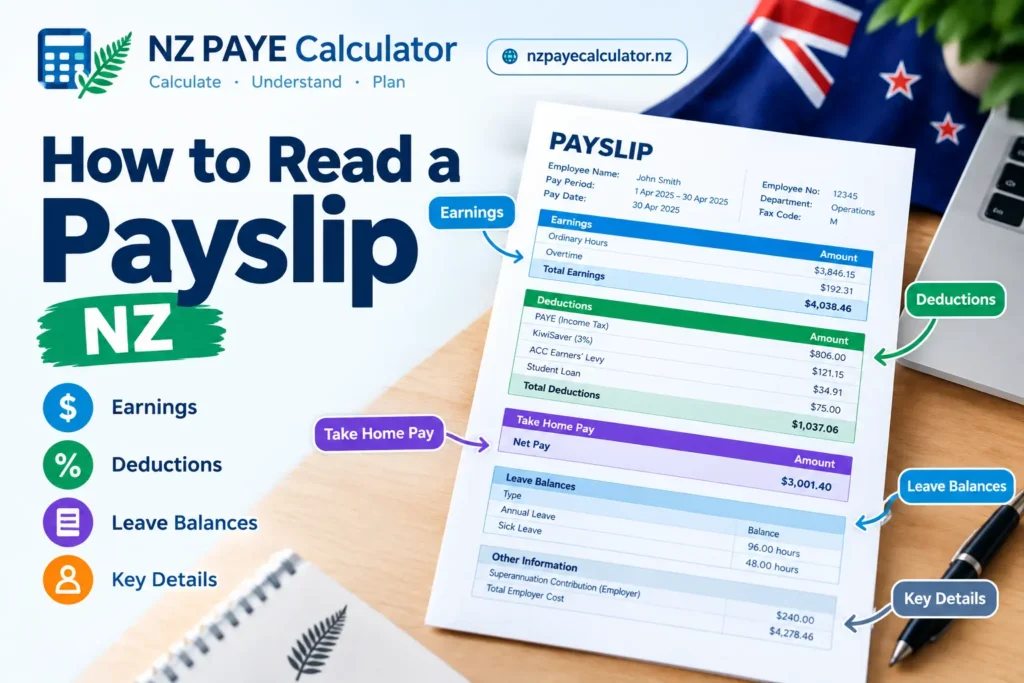
Run any ambulance salary through the NZ PAYE calculator, or compare professions in the nurse pay scale NZ guide, the doctor salary NZ guide, the police salary NZ guide and the firefighter salary NZ guide. See also take-home pay for every salary and take-home pay by hourly rate.
Frequently Asked Questions
How much do paramedics get paid in NZ?
At Hato Hone St John, paramedics earn a base salary of $91,436 to $100,906 a year, and extended care and critical care paramedics $121,670 to $134,272. Penal rates for nights and weekends are paid on top — union analysis estimates loadings add roughly 10% to base pay across a roster.
What is the difference between an EMT and a paramedic?
An EMT is the grade below paramedic and the main entry point into St John, earning $69,245 to $76,417. Paramedics hold a paramedicine degree and are registered health practitioners; EMTs are not a registered scope and practise under their employer’s Authority to Practice.
How do you become a paramedic in NZ?
Complete a three-year Bachelor of Health Science in Paramedicine at AUT or Whitireia (about 1,000 hours of clinical placement), register with Te Kaunihera Manapou, hold an Annual Practising Certificate, and gain the ambulance service’s Authority to Practice through its graduate programme.
What does paramedic registration cost?
Registration costs $200 for NZ-qualified applicants and the Annual Practising Certificate is $600 a year including the disciplinary levy. St John and Wellington Free Ambulance job ads state the employer reimburses the practising certificate annually.
Do paramedics get paid extra for nights and weekends?
Yes. Penal rates of 25% apply to unsocial hours. Because about 40% of shifts attract penals on a typical roster, the unions estimate the loading averages out to roughly 10% on top of base pay.
When is the next paramedic pay rise?
Under the renewed collective agreement settled in August 2026, rates rose 2.2% from 1 July 2026 (2.7% for EMTs) and rise a further 2.0% from 1 July 2027. The agreement runs to 30 June 2028.
Who employs paramedics in New Zealand?
Two charitable ambulance services: Hato Hone St John, which provides emergency ambulance care to around 90% of the population, and Wellington Free Ambulance in Wellington and Wairarapa — the only free ambulance service in the country.
What hours do paramedics work?
Typically 12-hour shifts on a four-on, four-off pattern — two day shifts and two night shifts — averaging 42 hours a week. That is why ambulance salaries are calculated over 2,184 hours a year rather than the standard 2,080.
Compare Other NZ Profession Salaries
Compare the official pay scales for nurse pay scale NZ, doctor salary NZ, midwife salary NZ, police salary NZ, firefighter salary NZ, corrections officer salary NZ and soldier salary NZ — every guide works out the take-home pay at each step.
Sources: Workers First Union and CICTAR, Emergency! Saving New Zealand’s Ambulance Services, May 2026 (grade rates from the 2026 MUCA); Terms of Settlement, Ambulance Operations MUCA renewal, signed 25 August 2026; Hato Hone St John job advertisements and Tertiary Employment Pathway Guide (April 2026); Te Kaunihera Manapou | Paramedic Council — fees; Wellington Free Ambulance job advertisements via Paramedics Australasia; Tahatū Career Navigator pay data. The full MUCA step table is not publicly published; entry and ceiling rates are the published figures. Take-home figures use the 2026/27 income tax brackets and ACC earner levy published by Inland Revenue and ACC, on the M tax code before KiwiSaver and student loan. General information only, not tax or career advice.